Why Losing a GIF Hurts More Than Losing a Photo
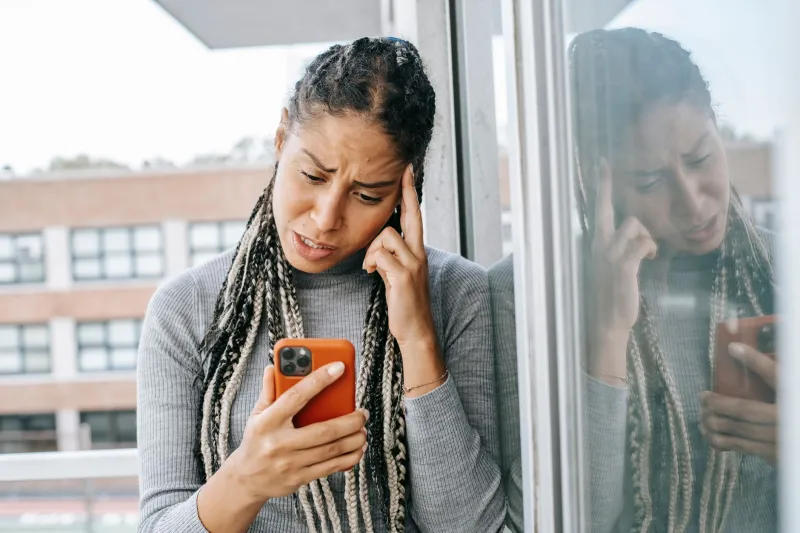
You probably remember the moment. You go to pull up that perfect reaction GIF — the one that's been living rent-free in your favorites for three years — and it's just... gone. Broken image icon. Dead link. Nothing. And for a second, it genuinely stings. Not in a dramatic way, but in a quiet, hollow kind of way that surprises even you.
Here's the thing: you're not being dramatic. That feeling is real, it's measurable, and researchers are increasingly interested in why it happens more intensely with GIFs than with almost any other form of digital media.
The Loop Is the Point
To understand the grief, you first have to understand what makes a GIF psychologically distinct from a photo or even a short video. Dr. Pamela Rutherford, a cognitive neuroscientist who studies digital media consumption patterns, puts it plainly: "The loop is doing something unusual to the brain. Repetition without resolution keeps your attention primed and your reward pathways slightly activated. You never get the full dopamine hit of 'completion,' so you keep watching."
That's the key word — completion. A photo delivers a moment and closes it. A video plays out and ends. A GIF refuses to finish. It cycles back, again and again, in a way that the brain interprets as ongoing rather than past. The emotional moment it captures — a laugh, a shrug, a dramatic eye-roll — never technically stops happening in your mind's eye.
This is part of why certain GIFs become so deeply embedded in people's emotional vocabularies. They're not memories of a thing that happened. They're more like a feeling that's perpetually in progress.
Shared Loops, Shared Identity
There's another layer here, and it has everything to do with how GIFs actually travel across the internet. Unlike a photo you took yourself, most GIFs exist in a shared cultural space. You didn't create that clip of a character throwing their hands up in exasperation — but you've sent it to your best friend seventeen times. You've used it to respond to your mom's group chat. It showed up perfectly in a work Slack thread at exactly the right moment.
Digital anthropologist Marcus Webb, who has studied online community formation for over a decade, describes this as "emotional co-ownership." The GIF isn't yours in any legal sense, but it's yours in every meaningful social sense. "When communities share the same visual shorthand over and over, those images become identity markers," he explains. "Losing one isn't just losing content — it's losing a piece of the shared dialect."
This is something the GIF community on platforms like Gifsom understands intuitively. The most-saved and most-shared loops aren't just funny clips. They're inside jokes rendered in pixels, emotional shorthand that entire friend groups and fandoms have built into their daily communication. When one disappears, it's a little like losing a word from your vocabulary.
Why GIFs Beat Photos in the Grief Department
Ask most people which would hurt more — losing a photo album or losing their GIF collection — and they'll say the photo album without hesitation. But behavioral data and anecdotal evidence keep suggesting the reality is more complicated.
Part of the explanation is functional. Photos are typically personal artifacts. They capture your life. But because of that, we tend to back them up, print them, share them intentionally with people who already share that context. GIFs, by contrast, exist in a more casual, ambient part of our digital lives. We don't think to archive them. We assume they'll just always be there.
When they're not, the loss is disorienting precisely because it was unexpected. "There's a specific type of grief that comes from losing something you never thought to protect," says Rutherford. "It triggers a kind of retroactive anxiety — suddenly you're aware of how much you were taking for granted."
The shareability factor compounds this. A photo you lost is a private wound. A GIF that disappears from a major platform affects thousands of people simultaneously, which creates a collective mourning experience that can spread across social media almost like a news event. Remember when entire categories of GIFs were wiped from major databases due to licensing disputes? The response in comment sections and forums looked a lot like people processing an actual loss.
Parasocial Loops
There's also the parasocial dimension to consider. A huge percentage of widely-circulated GIFs feature celebrities, fictional characters, or public figures caught in a specific expressive moment. Over years of repeated sharing, those loops become associated not just with the original source material but with the specific emotional contexts in which you've used them.
A GIF of a beloved TV character looking skeptical isn't just a clip from a show anymore. It's every conversation where you deployed it. It's the texture of certain friendships, certain arguments, certain running jokes. When that GIF vanishes — taken down because of a DMCA claim or a platform-wide purge — you're not just losing a piece of content. You're losing a vessel that held a lot of accumulated meaning.
Webb calls this "contextual accumulation," and he argues it's one of the least-studied aspects of digital emotional attachment. "We think of media as static — you watch it, you feel something, you move on. But GIFs are interactive and relational in a way that most media isn't. They accrue emotional weight over time through use."
What Platforms Keep Getting Wrong
The corporate decisions that lead to GIF deletions are almost always made without any consideration of this attachment dynamic. Licensing agreements expire, content libraries get restructured, platforms pivot away from animation support — and millions of saved loops just evaporate.
For users, there's rarely any warning. One day it's there; the next day it's a broken link and a vague error message. No archive. No replacement. Just gone.
This is part of why spaces that prioritize preservation and community — places where users can upload, tag, and maintain their own GIF libraries — matter more than platforms might realize. The ability to save and re-share a loop isn't just a convenience feature. For a lot of people, it's the difference between losing something that mattered and actually keeping it.
The Grief Is Valid. So Is the Attachment.
If you've ever felt a pang when a favorite GIF disappeared, you don't need to talk yourself out of it. The science backs you up. The social dynamics back you up. The fact that you're not alone — that there are entire Reddit threads dedicated to people trying to track down lost loops — backs you up.
GIFs are weird little emotional artifacts. They loop forever until they don't, and when they stop, you feel it. That's not a quirk. That's just what happens when something genuinely becomes part of how you communicate and connect.
Some things are worth mourning, even when they only ever existed as 256 colors cycling through a tiny window on your screen.